 Our use of cookies
Netomnia: Who they are and what they do
Netomnia is a full fibre network builder and wholesale infrastructure provider in the UK. This guide covers who they are, how their network is built and delivered, where they operate, and how customers access their services through broadband providers.
Who are Netomnia?
Netomnia is an alternative network operator, commonly referred to as an “altnet”. They build and own the fibre infrastructure that telecom providers use to deliver broadband services to customers.
Netomnia does not sell broadband directly, though it is currently part of the same group as YouFibre, which offers broadband services directly to customers.
Founded in 2019, Netomnia set out to bring full fibre to the premises of towns and cities underserved by the major providers, building its own infrastructure independently of Openreach.
As one of the UK’s growing number of altnets, Netomnia participates in the government’s gigabit broadband voucher scheme. They have steadily expanded their full fibre footprint across England, delivering speeds of up to 1Gbps to homes and businesses.
Who owns Netomnia?
Netomnia was founded and backed by investors Advencap, DigitalBridge and Soho Square Capital.
In February 2026, Netomnia announced it had agreed to merge with Nexfibre, a wholesale fibre joint venture backed by InfraVia Capital Partners, Liberty Global and Telefónica, the parent companies behind Virgin Media O2.
The deal, expected to be completed in Q3 2026, will create the UK’s largest alternative full fibre platform with a combined footprint of approximately 8 million premises by 2027. The deal is expected to unlock £3.5 billion of international investment into UK digital infrastructure.
What will happen to YouFibre?
As part of the transaction, YouFibre will be acquired by Virgin Media O2, separating it from Netomnia. The YouFibre brand is expected to remain active after the sale, so existing customers should continue to receive the same service under new ownership.
What is the relationship between Netomnia and YouFibre?
Netomnia and YouFibre have operated as part of the same group since Netomnia acquired YouFibre in 2021.
Netomnia builds and maintains the physical full fibre network infrastructure, while YouFibre is the retail broadband provider delivering packages directly to customers.
In simple terms, Netomnia owns the cables, and YouFibre sells the broadband. Netomnia is not itself a broadband provider and does not sell packages directly to customers.
As outlined above, YouFibre is set to move to new ownership under Virgin Media O2 following the nexfibre merger, separating the two businesses entirely.
How does Netomnia build and deliver its network?
Netomnia operates as a wholesale full fibre network builder. Rather than selling broadband to customers directly, they invest in building the physical infrastructure that makes fast, reliable broadband possible in the first place.
Building the network
Full fibre broadband requires laying fibre optic cables directly to a property, replacing the old copper telephone lines that much of the UK still relies on. Netomnia plans and funds this construction work itself, working street by street and town by town to extend its broadband infrastructure footprint across the UK.
The wholesale model
Once the infrastructure is in place, Netomnia makes its network available to retail broadband providers. Those broadband providers then use the network to offer broadband packages to customers. This is similar to how Openreach operates, building and maintaining a network that other providers access.
From network to your door
When you sign up with a broadband provider on the Netomnia network, the business broadband installation process involves a Netomnia engineer connecting your property to the full fibre infrastructure. From that point, your provider manages your service, while Netomnia maintains the underlying network.
Who regulates Netomnia?
As a UK telecommunications network operator, Netomnia is regulated by Ofcom, the independent regulator for the communications industry. Ofcom oversees how network operators and broadband providers operate, ensuring fair access, network reliability, and compliance with industry standards.
Netomnia is also subject to the same UK planning and street works regulations as other infrastructure builders when laying fibre across public land and highways.
Where does Netomnia cover in the UK?
Netomnia’s network spans multiple regions across the UK, with coverage concentrated in certain towns and cities.
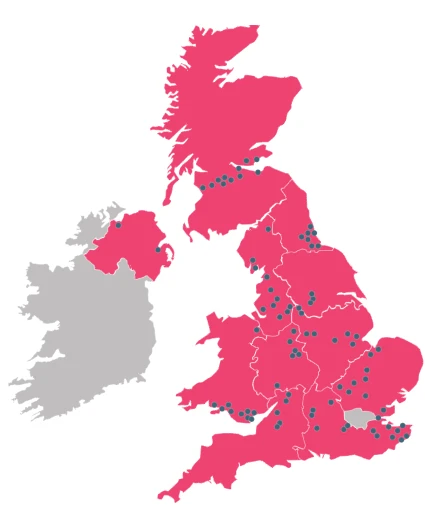
Source: Netomnia – March 2026
A key part of Netomnia’s mission has been targeting towns and cities that have been overlooked by the major network providers. Rather than competing head-to-head with Openreach in already well-served areas, they have focused their investment on underserved communities where full fibre has been slower to arrive.
Coverage is growing steadily, but availability varies significantly by postcode. The most reliable way to check whether Netomnia’s network has reached your area is to use Netomnia’s availability checker on their website.
You can also find out more in our business broadband availability guide.
How Netomnia compares to Openreach
Openreach is the UK’s dominant network operator and is owned by BT, though it operates as a legally separate entity.
This separation means any broadband provider can access the Openreach network on equal terms, rather than BT having an unfair advantage over competitors.
Netomnia operates a similar wholesale model but is entirely independent, building its own full fibre network rather than using or upgrading Openreach’s existing infrastructure.
Why do multiple networks exist in the UK
The UK government has actively encouraged competition in the broadband infrastructure market, recognising that relying on a single network operator limits the pace of the fibre rollout.
This has led to a growing number of altnets, including CityFibre, Community Fibre and Hyperoptic, investing in their own independent networks alongside Netomnia, helping drive the UK toward its gigabit broadband targets.
Full fibre versus legacy infrastructure
Openreach inherited a vast copper telephone network and has been gradually upgrading parts of it to fibre, resulting in a mix of full fibre and part fibre technology across its network.
Netomnia, as a newer operator, has built its network exclusively as full fibre to the premises from the ground up, with no legacy copper in its network.
How competition between networks works
Most broadband providers are not tied to a single network and will offer services across multiple infrastructure providers, depending on what is available in a given area.
Where Netomnia has built its network alongside Openreach, providers can choose which infrastructure to use, with competition between networks generally driving better pricing and speeds for customers.
Netomnia reviews
As a wholesale network operator, Netomnia does not have a large volume of direct customer reviews. Most customers interact with broadband providers rather than Netomnia directly, so reviews of Netomnia itself are limited. On Trustpilot, Netomnia currently holds a score of 4.0 based on a small number of reviews, with positive feedback largely focused on the installation experience.
For a broader picture of the network itself, YouFibre customers provide a useful reference point. With an excellent Trustpilot score of 4.7 from over 80,000 reviews, making it one of the best business broadband providers. Much of the positive feedback centres on connection stability and the speeds delivered over the Netomnia infrastructure.
Netomnia – FAQs
Below, we answer the most frequently asked questions about Netomnia.
What broadband types does Netomnia offer?
Netomnia builds exclusively full fibre to the premises (FTTP) infrastructure, supporting a range of business connectivity products. These include full fibre business broadband, business Ethernet, Ethernet Point to Point, and Dark Fibre, making the network suitable for a variety of business use cases and requirements.
Is Netomnia available for businesses?
Yes. The Netomnia network supports business broadband in covered areas, with a range of broadband providers offering business packages over their infrastructure.
If full fibre has reached your postcode, you can use our business broadband comparison service to find providers offering services in your area.
Is Netomnia reliable?
Full fibre networks are generally considered more reliable than part-fibre SoGEA connections, as they are less susceptible to signal degradation over distance. Customer feedback via YouFibre reflects this, with connection stability and consistent speeds among the most commonly praised aspects of the network.
Which providers can I access on the Netomnia network?
While YouFibre is the best-known retail provider on the Netomnia network, there are a growing number of broadband providers offering services over its infrastructure. These include idnet, Flexgrid, TalkStraight, Fibre Nova, Triangle and Giant, among others. This gives customers in covered areas a reasonable degree of choice when selecting a broadband provider.
Why is Netomnia installing fibre in my street?
Netomnia is actively expanding its full-fibre network across the UK, which involves laying fibre-optic cables through streets and neighbourhoods. This work is part of the broader national effort to replace ageing copper infrastructure with full fibre. Temporary roadworks and street disruption are a normal part of this process.
What happens when Netomnia comes to my area?
Once Netomnia completes the infrastructure build in your area, retail broadband providers on the network will begin offering services to residents and businesses at that postcode. You can check whether your area is ready using the Netomnia availability checker. The business broadband installation process itself is straightforward, with an engineer visiting to connect your property to the network.
 Back to blog