 Our use of cookies
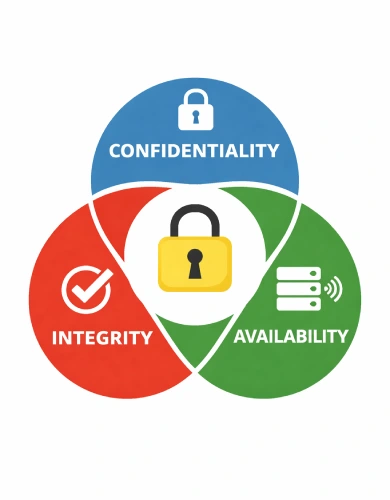 CIA Triad in Cybersecurity
 The CIA triad is the foundational model behind how businesses protect their data. It defines three core principles (Confidentiality, Integrity, and Availability) that guide everything from access controls and encryption to backup strategies and disaster recovery. This guide breaks down each principle with real-world risks, practical controls, and a worked example showing how they apply…
read more Attribute-based access control (ABAC) for businesses
 Attribute-based access control (ABAC) is a modern access control model that grants permissions based on real-time context rather than fixed roles. Evaluating attributes such as user identity, device, location, and behaviour, it enables more precise and adaptive access decisions. This guide explains how ABAC works, how it relates to RBAC, where it fits in the…
read more Privileged Access Management (PAM): Securing high-risk environments
 Privileged Access Management (PAM) is a cybersecurity control that specifically protects accounts with elevated access to critical systems. It prevents attackers from gaining unauthorised access that could cause severe damage, from sabotaging key infrastructure to stealing sensitive information. This guide explains what PAM is, why privileged access presents significant security risks, and how PAM platforms…
read more Joiner-Mover-Leaver (JML): The access lifecycle process
 The Joiner-Mover-Leaver (JML) process governs how organisations grant, modify, and revoke access to systems throughout an identity’s lifecycle. It helps organisations maintain least-privilege access while reducing security and compliance risks. This guide explains how the JML lifecycle works, who is responsible for it, and how organisations manage access securely. Contents: What is the Joiner-Mover-Leaver (JML)…
read more Role-Based Access Control (RBAC) Explained
 Role-Based Access Control (RBAC) is an authorisation management model that allows organisations to group users and applications into roles with standardised permissions. It allows security teams to stay on top of user privileges, and is especially useful when there are a dozen or more identities actively using a system. This guide explains how RBAC works…
read more Identity security for businesses
 Identity security is a branch of cybersecurity that manages human and non-human access to systems to prevent unauthorised use. It encompasses everything from the cryptographic technologies that prevent identity fraud to practical controls such as password managers, multi-factor authentication (MFA), and identity monitoring. This article explores the multi-layered technology stack behind identity security, why it…
read more